
Water Tank Fire Truck Tonnage: 3–25 t Selection Guide
Most tender documents start the same way: “one water tank fire truck required.” The tonnage line is often left blank, and the supplier fills it in. That blank decides two things that only show up later — how long the first attack can last on scene, and whether the truck can physically reach the water point at all.
Tank size is not a matter of “bigger is better.” It is the result of three constraints pulling against each other: how much water must flow in the first minutes, what the roads and site will accept, and who else is responding alongside.
1. Three constraints that decide tonnage
Water source. Municipal hydrants have limited diameter and pressure. With hydrant refilling, on-board capacity defines how long the first attack lasts. Where rivers, ponds or reservoirs are close by, drafting capability matters more than tank size.
Roads and site access. Village road width, bridge load limits, yard turning radius and clearance height all rule out certain tonnages immediately. As gross vehicle weight rises, so do the requirements on pavement strength and turning space.
Fleet structure. Single-unit first response and multi-unit operations follow different logic. A first-response tanker must carry enough water to hold until backup arrives; in a fleet, tankers often handle supply and shuttle duties, so capacity can be concentrated.
2. Six tonnage bands at a glance
| Band | Typical tank capacity | Common chassis type | Best fit | Main limitation |
|---|---|---|---|---|
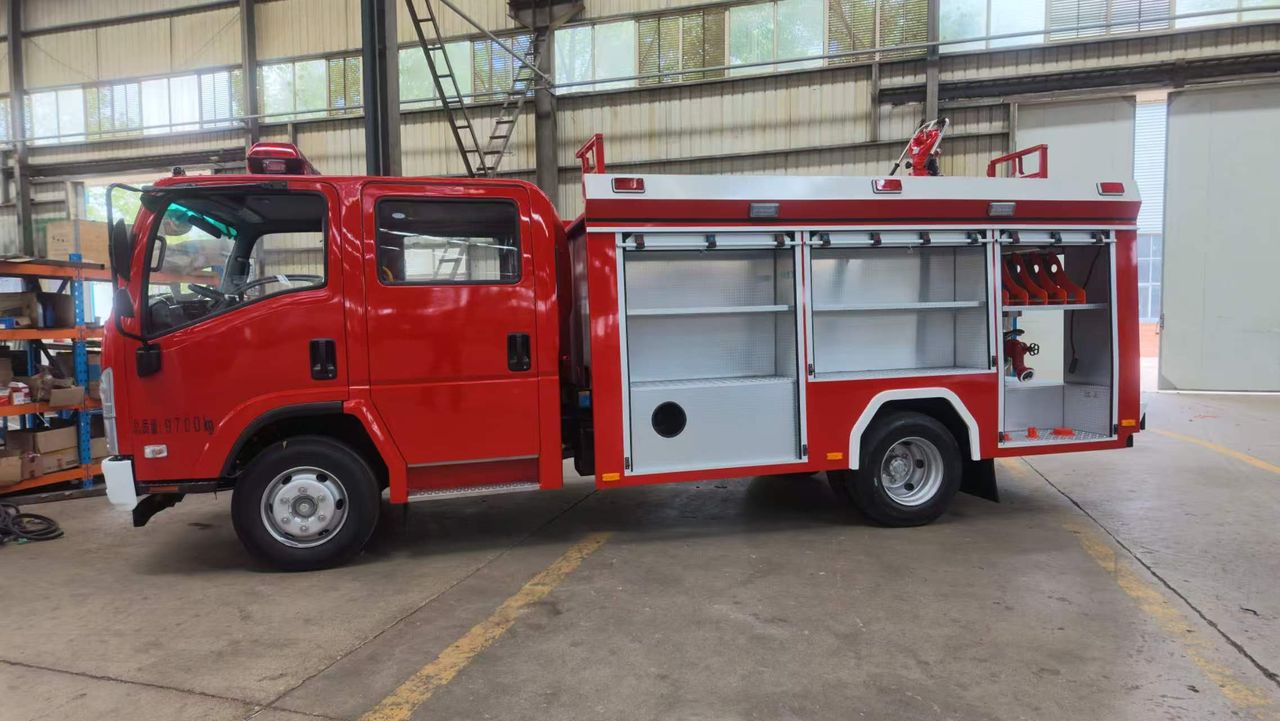
| 3–5 t | 3,000–5,000 L | Light / medium-duty, compact footprint | Township brigades, community stations, plant fire teams | Short duration; needs a nearby water source |
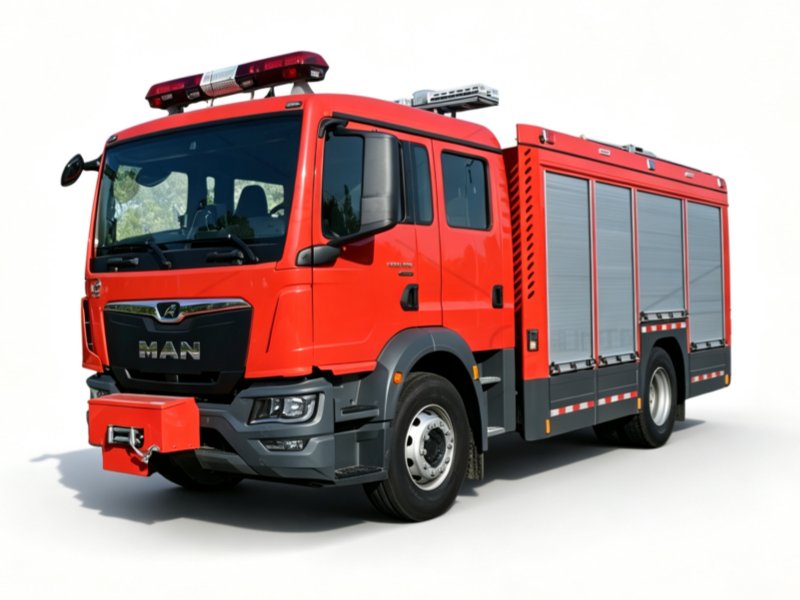
| 6–8 t | 6,000–8,000 L | Medium / heavy-duty class 2 chassis | Urban first response, county-level mainstay | Long body; tight access in older districts |
| 10–12 t | 10,000–12,000 L | Reinforced 4×2 or 6×4 | Urban core plus peri-urban areas | High GVW; check bridge and culvert limits en route |
| 15–16 t | 15,000–16,000 L | 6×4 | Chemical parks, large warehouses, logistics hubs | Requires hardstanding and turning space |
| 18–20 t | 18,000–20,000 L | 6×4, 8×4 | Water-scarce regions, relay supply head | High demands on pavement strength and turning radius |
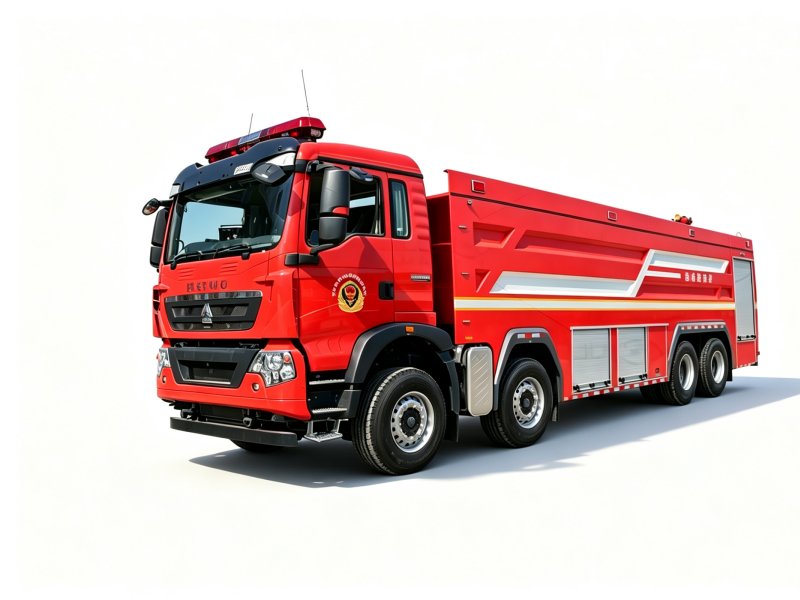
| 24–25 t | 24,000–25,000 L | 8×4 | Large petrochemical sites, airports, ports | Requires a dedicated route survey |
Figures above describe liquid payload by class, not nominal tank volume. For any specific model, capacity, gross weight and pump output are governed by the MIIT announcement and the vehicle nameplate.
3. Three items buyers overlook
Pump rated flow and pressure. Two 8-tonne trucks can behave very differently depending on whether the pump is low-pressure high-flow or medium-low pressure. Decide how many branches and what flow per branch you need, then size the pump backwards from that.
Monitor diameter and reach. Whether the monitor must hit a multi-storey facade, a stack, or a tank farm changes the required diameter and throw. Writing this into the specification is far more useful than “monitor included.”
Water supply method. Hydrant only, drafting from open water, or a relay connection point — this determines suction depth and priming method, and how quickly water flows after arrival.
4. Five items worth fixing in the specification
| Item | How to write it | Why it must be written |
|---|---|---|
| Tank capacity | Water ×× L (including foam ×× L) | Otherwise bidders quote on different bases and prices are not comparable |
| Fire pump | Rated flow ×× L/s @ ×× MPa | The pump is the core of the vehicle; “fire pump included” tells you nothing |
| Monitor | Nozzle diameter, rated flow, throw | Directly sets the effective coverage on scene |
| Chassis | Brand, drive configuration, emission stage | Affects registration, service network and spare parts |
| Water supply | Hydrant / open water / relay interface | Determines pump type and accessory package |
5. A closing note
There is no standard answer for tonnage — only the answer that matches a given district. Comparing with neighbouring units is common practice, yet road widths, water source distribution and fleet structure rarely match exactly. List the narrowest road, the farthest water point and the tallest building in your area first; the tonnage band will narrow itself.
JANTE water tank fire trucks cover tonnage bands from 3 t to 25 t with different chassis and body combinations. For confirmed model data, contact us through the website form or by phone before finalising a specification.
Note: tonnage and configuration ranges in this article are for selection reference only. Capacity, gross weight, pump flow and monitor reach of any specific model are governed by the MIIT announcement and the vehicle nameplate.